A support agent gives a customer an outdated refund policy. An underwriting assistant overlooks a revised risk rule. A sales copilot quotes pricing from last quarter. These are not primarily model problems. They are knowledge-access problems. The question of when should companies use RAG matters because production AI is only as useful as the current, authorized information it can retrieve and apply.
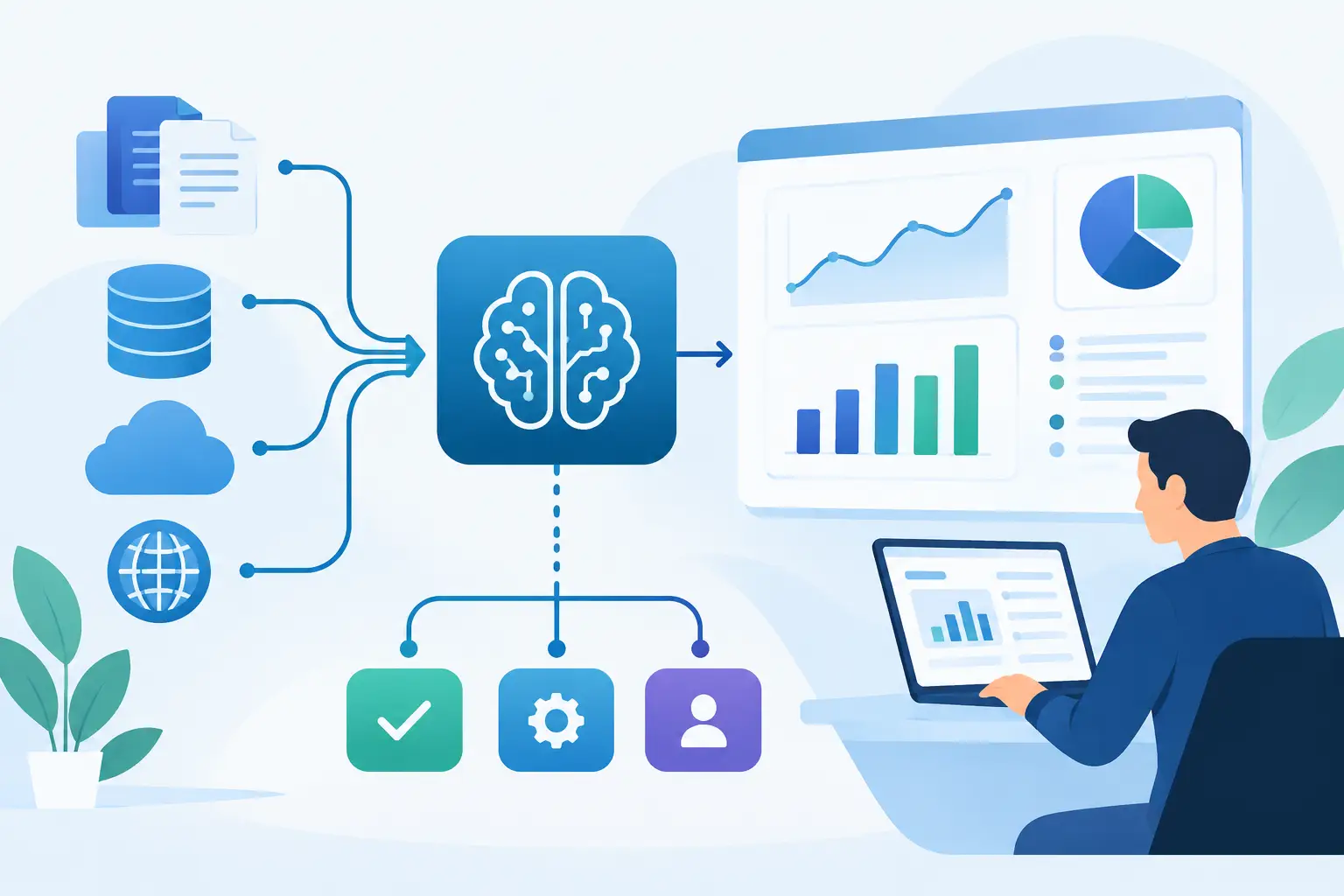
Retrieval-augmented generation, or RAG, gives an AI application the ability to search approved business content before generating a response. Rather than asking a language model to rely solely on its training data, the application retrieves relevant documents, records, or policy excerpts and supplies that context at runtime.
For operationally complex companies, RAG can turn AI into working software connected to the systems where decisions happen. It is not the right answer to every AI requirement, however. The value depends on the type of knowledge involved, the risk of an incorrect answer, the quality of the underlying data, and the workflow around the model.
When Should Companies Use RAG?
Companies should use RAG when an AI system needs to reason over information that is proprietary, frequently changing, distributed across business systems, or subject to access controls. It is especially effective when users need answers grounded in source material rather than plausible general responses.
Consider a service organization whose agents work across a CRM, product documentation, contracts, internal policies, and ticket history. A general-purpose model may write well, but it does not know which contract version applies to a specific customer or whether a policy changed yesterday. A RAG layer can retrieve the relevant customer record, approved policy, and product guidance before the model drafts an answer.
The same pattern applies to operations teams processing invoices, claims, applications, vendor requests, compliance reviews, and technical support cases. In each situation, the model needs current context from systems of record. RAG provides that context without retraining a model every time business knowledge changes.
Four conditions are strong signals that RAG is worth evaluating:
- Your team relies on large volumes of documents, knowledge-base content, or system records to complete recurring work.
- The information changes often enough that static prompts and model training quickly become outdated.
- Users need traceable answers with citations, source excerpts, or links back to the governing record.
- Access to information must follow roles, customer accounts, regions, departments, or compliance rules.
These signals are not just technical. They point to an operational opportunity: reducing the time employees spend finding information, reconciling conflicting documents, and manually transferring context between systems.
The Business Problems RAG Solves Well
RAG is most valuable when retrieval is directly connected to an action or decision. A standalone chatbot that searches a document library can be useful, but its impact is limited if employees still need to copy answers into other systems and complete work manually.
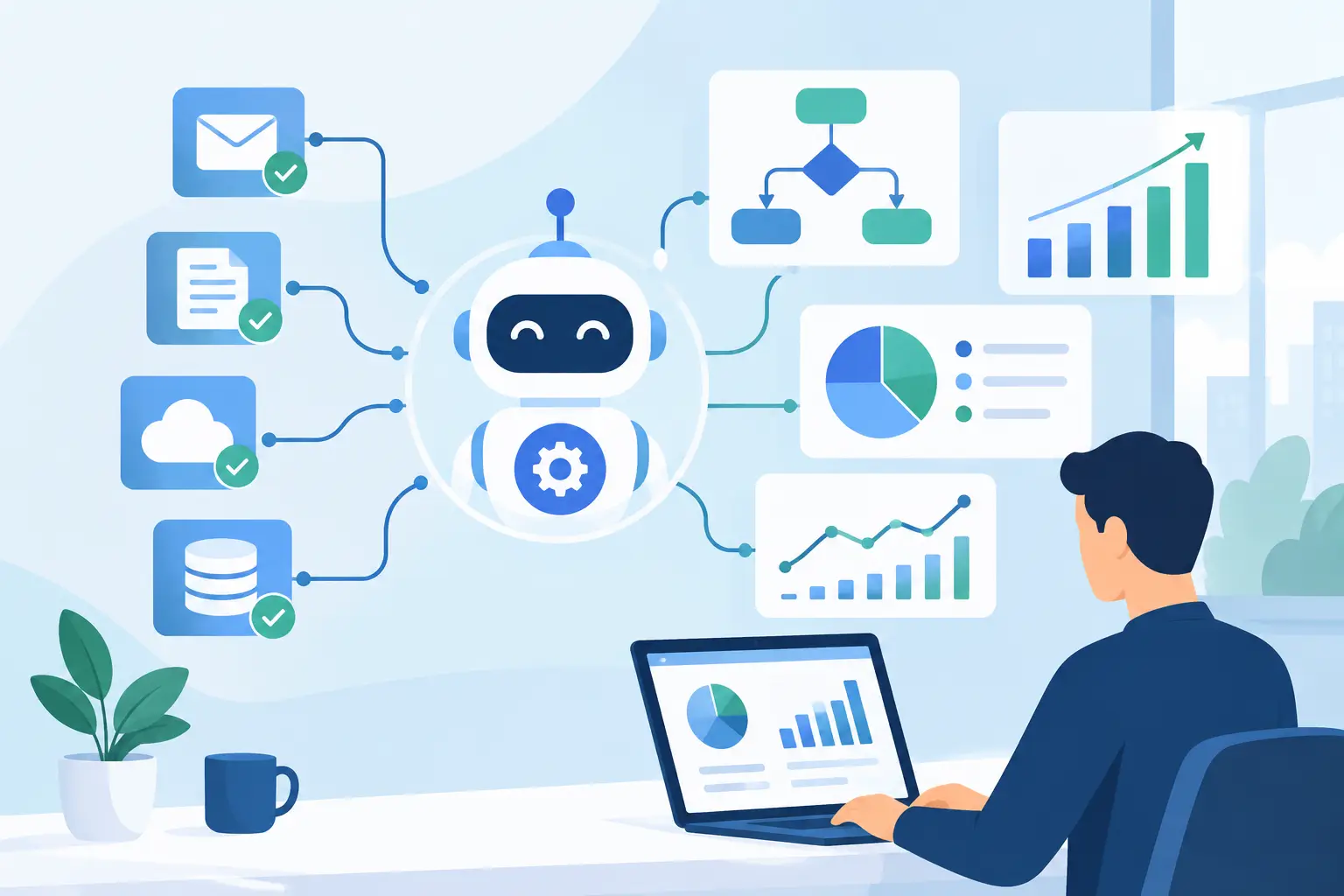
A stronger implementation retrieves knowledge, produces a constrained recommendation or draft, and sends the result into a governed workflow. For example, a claims operations assistant can retrieve policy language, prior claim notes, and required forms, then prepare a review packet for an adjuster. The adjuster remains accountable for the decision, while the system reduces search and documentation work.
Customer support is another practical fit. RAG can surface the right troubleshooting article, account-specific configuration details, and recent incident guidance while an agent is handling a ticket. For lower-risk, repeatable issues, it can draft a response or drive self-service. For more sensitive cases, it can provide the agent with sources and a recommended next step.
Sales and account management teams can use RAG to prepare account briefings from CRM records, renewal terms, product usage data, and approved collateral. Legal, finance, and procurement teams can use it to locate clauses, compare vendor requirements, or route documents for review. The common requirement is not simply “we have documents.” It is that people repeatedly need the right information to move a business process forward.
RAG Is Not a Substitute for Clean Systems
RAG does not repair contradictory policies, duplicate customer records, missing document ownership, or weak permissions. It can expose those issues quickly because retrieval makes the quality of the source material visible in AI outputs.
If three versions of a pricing policy are indexed without clear effective dates, the system may retrieve all three. If the retrieval layer has no metadata for product line, customer segment, or jurisdiction, the model may receive broadly relevant but operationally wrong context. The model can only work with what the architecture supplies.
This is why production RAG requires more than uploading files into a vector database. Documents need to be parsed correctly, segmented in a way that preserves meaning, tagged with useful metadata, and synchronized when source content changes. Structured data often needs direct API or database retrieval rather than document search alone. A customer’s current balance, open ticket status, or entitlement should come from the system of record, not a copied PDF.
Security requirements must also shape the design. Retrieval should enforce permissions before content reaches the model. A user who cannot view a contract in the source system should not be able to expose it through an AI prompt. Audit logs, retention rules, encryption, vendor controls, and human approval points should be planned as part of the implementation, particularly in regulated or compliance-sensitive workflows.
When RAG Is the Wrong Tool
RAG is not necessary when the task does not depend on proprietary or current knowledge. General writing assistance, brainstorming, code formatting, translation, and summarizing a document already supplied in the prompt may not need a retrieval system.
It is also a poor first investment when the business process itself is undefined. If a team cannot agree on the current approval policy, escalation path, or source of truth, adding AI will amplify confusion. Start by clarifying the workflow and assigning ownership of the underlying knowledge.
Some problems call for a different technical approach. Fine-tuning may help when the objective is consistent style, classification behavior, or structured output patterns that do not change frequently. Traditional rules engines remain better for deterministic eligibility and calculation logic. Workflow automation may solve a manual handoff without using an LLM at all.
In many production systems, the right answer is a combination: rules for non-negotiable decisions, APIs for live transactional data, RAG for policy and knowledge retrieval, and an LLM for interpretation, drafting, and user interaction. The architecture should follow the decision risk, not the trend.
Build RAG Around a Measurable Workflow
The most reliable way to evaluate RAG is to begin with one bounded process. Choose a workflow with enough volume to prove value, a defined user group, accessible source systems, and measurable quality criteria. Good early candidates include support case resolution, document intake, internal policy assistance, proposal preparation, and compliance evidence gathering.
Before building, define what a correct outcome looks like. That may include answer accuracy, source relevance, time to resolution, percentage of cases completed without escalation, reduction in handling time, or fewer policy exceptions. Establish a test set from real historical cases, including ambiguous requests and known edge cases. Evaluating only polished demo questions produces false confidence.
The retrieval layer should be tested separately from the model response. If the correct source is not retrieved, better prompting will not solve the problem. Teams should measure whether the system finds the right document, version, record, and passage. Then they should evaluate whether the generated response accurately uses that material, follows the required format, and avoids unsupported claims.
Human review remains appropriate for high-impact outputs. A well-designed system can distinguish between low-risk tasks that can be automated and cases that require escalation. Confidence thresholds, missing-data checks, and policy-based routing make that distinction operational rather than theoretical.
At Invatechs, this means treating RAG as an integrated software capability, not a chatbot feature. Secure connectors, role-aware retrieval, workflow actions, QA, monitoring, and ongoing content governance are what turn an AI prototype into a dependable business system.
Start Where Knowledge Delays Work
The best RAG opportunity is often hiding in a queue: tickets waiting for research, documents waiting for review, requests waiting for someone who knows where the answer lives. Map that delay to its sources, decision rules, and handoffs before selecting a model.
If the workflow needs current internal knowledge and the answer must be grounded, permissioned, and actionable, RAG is likely a strong fit. Build the first implementation around a narrow decision, prove quality against real work, and expand only after the retrieval and controls earn trust.