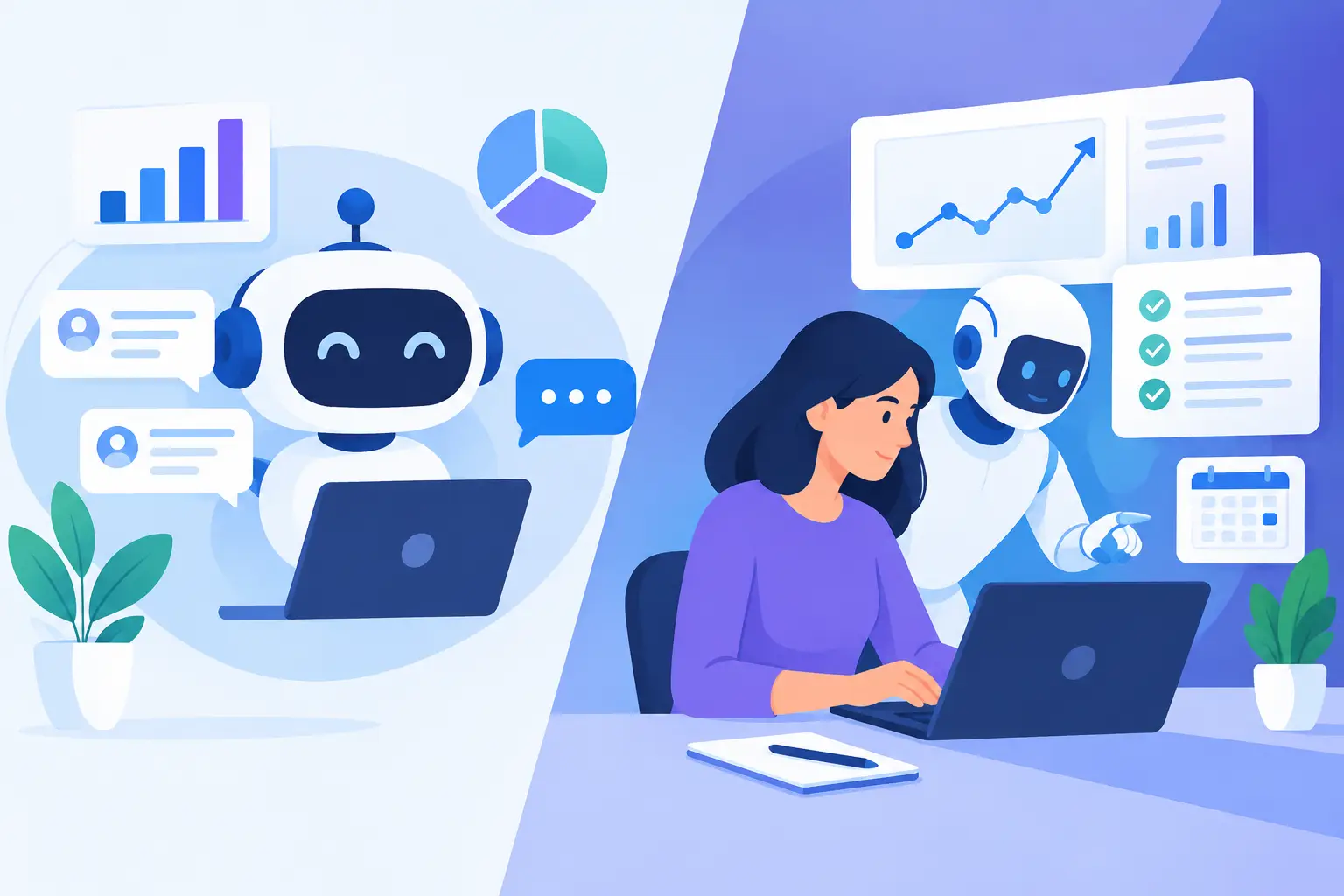

A customer-service agent that can read account history, summarize a case, and draft a reply may save hours every week. If it exposes restricted data, makes an unsupported claim, or acts without an approval record, those savings can create a larger operational problem. Compliance ready AI workflows address that gap by putting AI inside controlled business processes rather than treating it as a standalone chat interface.
For operations leaders, the question is not whether a model can generate a useful answer. It is whether the workflow can reliably use the right data, apply the right rules, route exceptions to the right person, and produce evidence of what happened. That is the difference between a compelling demo and automation that can operate in a regulated, contract-sensitive, or high-accountability environment.
Compliance Ready AI Workflows Start With Process Design
Compliance is not a feature added after an AI pilot works. It is a design requirement that shapes the process, data architecture, user permissions, and release plan from the start.
Begin with the business decision being automated or assisted. In an insurance operation, that may be extracting fields from submissions and preparing an underwriting summary. In finance, it may be classifying invoices and identifying exceptions. In support, it may be drafting responses based on approved policy content. Each use case carries different risks, so each needs its own control model.
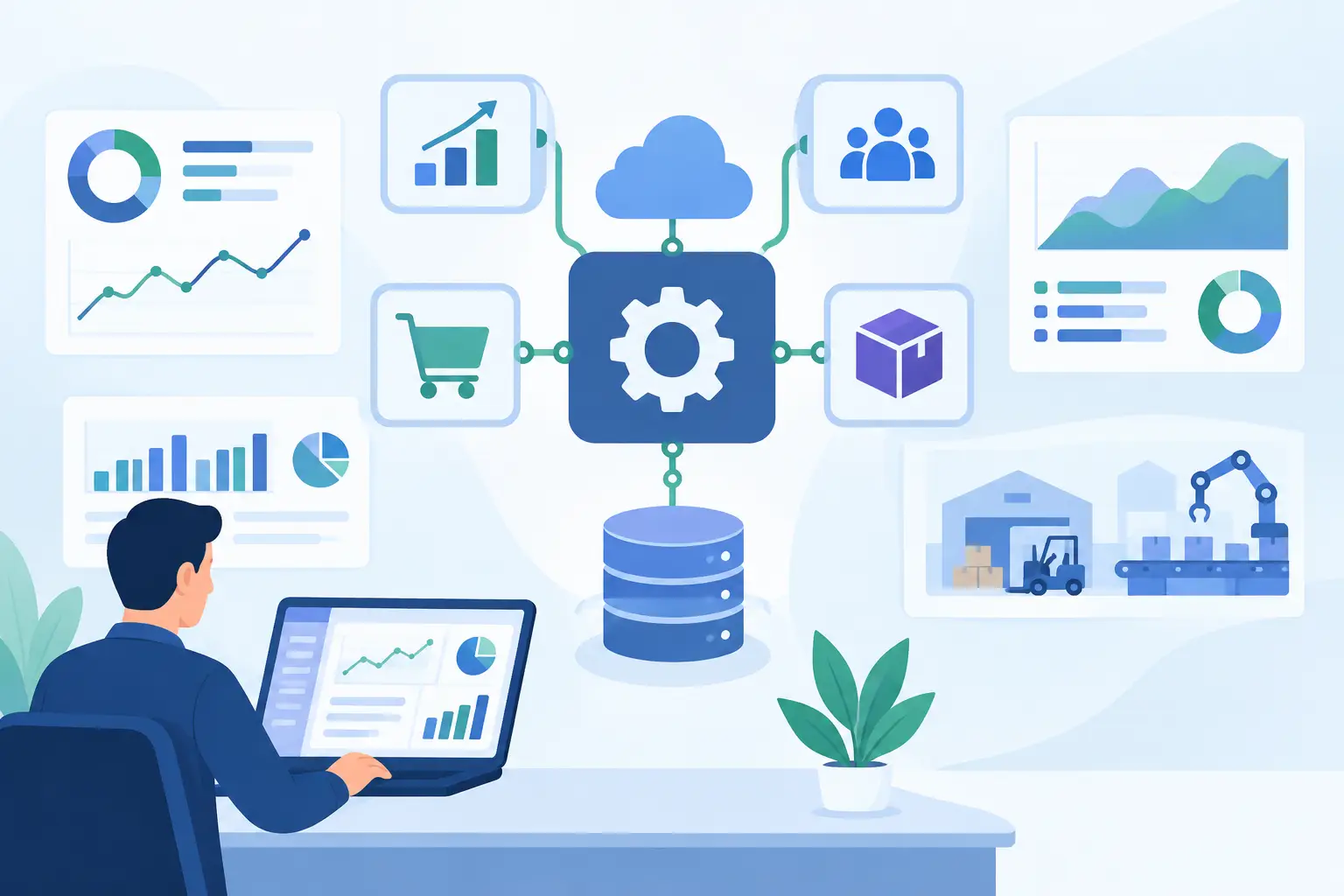
A useful first step is to map the workflow from trigger to outcome. Identify the source systems, the data fields involved, the model's action, the downstream system receiving the result, and the person or rule that can stop the process. This exposes assumptions that often remain hidden in early AI projects. For example, a workflow may be allowed to summarize a contract but not interpret a clause as legal advice. It may be allowed to create a draft CRM record but not change a payment status.
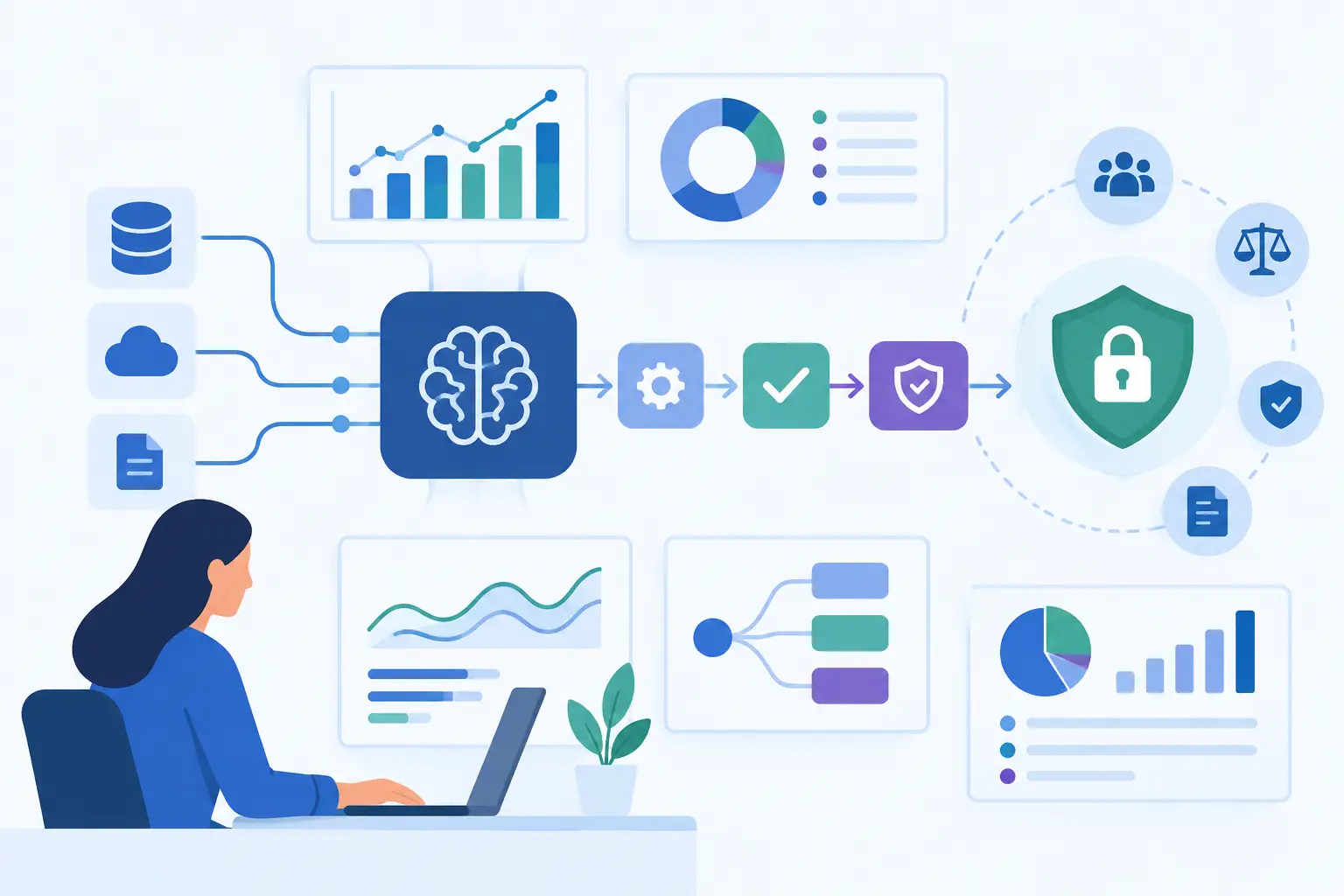
The most effective design principle is simple: use AI where judgment can be assisted, and use deterministic software where rules must be enforced. A model can extract information from an unstructured document, explain why a record was flagged, or rank a queue. A rules engine, validation service, or approval gate should control threshold checks, required fields, permissions, and irreversible actions.
Define the Data Boundary Before Connecting Systems
AI workflows often fail compliance review because teams connect broad data access before deciding what the workflow actually needs. A service agent does not need unrestricted access to every customer record. A document-processing workflow does not need to retain raw files indefinitely. Data minimization is both a security practice and an engineering discipline.
Classify the information entering the workflow. Separate public content, internal business information, customer data, financial data, health information, credentials, and other restricted categories. Then define what the workflow can read, what it can write, where data is stored, and how long it is retained. The answer may differ across jurisdictions, customer contracts, and business units.
This work should also cover the data leaving the workflow. A generated summary placed in a CRM, ERP, or ticketing system becomes part of the company record. If the output contains personal information, unsupported claims, or a misclassification, the risk does not disappear because an AI system created it.
Secure connectors matter here. Integrations should use scoped credentials, service accounts, encrypted transport, and least-privilege access. Avoid building a general-purpose agent with broad access to internal systems simply because it is convenient during prototyping. A narrowly defined integration is easier to test, monitor, and defend in an audit.
Treat knowledge sources as controlled systems
Retrieval-based AI can ground responses in internal policies, product documentation, and approved procedures. But a knowledge base is only useful when ownership and versioning are clear. If an agent retrieves an outdated policy, it can produce a well-written but incorrect answer.
Assign owners to high-impact knowledge sources. Define publication rules, refresh schedules, and archive procedures. Where appropriate, require the workflow to cite the internal source reference in its output or audit record. That makes review faster and helps teams identify whether an error came from the model, the source content, or the workflow logic.
Put Controls Around Decisions, Not Just Prompts
Prompt instructions can guide a model, but prompts alone are not controls. They can be changed, misunderstood, or bypassed by unexpected inputs. Production workflows need technical guardrails around the model.
Start with structured inputs and outputs. Instead of asking a model to return a free-form answer for a claims intake process, require it to populate defined fields such as policy number, incident date, category, confidence score, and missing information. Validate those fields against expected formats and business rules before writing them to a downstream system.
Next, set confidence and risk thresholds. A high-confidence, low-impact classification may move forward automatically. A low-confidence extraction, a large financial variance, or a response involving regulated language should move to human review. The objective is not to eliminate people from the process. It is to focus their attention on the decisions where their judgment matters most.
Human review must be practical, not ceremonial. Reviewers need the original input, the generated output, relevant source context, and a clear action to approve, edit, reject, or escalate. Their feedback should feed back into evaluation and workflow improvement. If reviewers repeatedly correct the same class of output, the team has found a specific engineering problem to solve.
Guardrails also need to address tool use. An agent that can query a CRM, send an email, or update an ERP should have explicit action permissions. Read access and write access are different risks. For sensitive workflows, require confirmation before external communication or record changes, and preserve the approval record alongside the action.
Build an Audit Trail That Explains the Outcome
When an operations leader, customer, auditor, or internal reviewer asks why a workflow made a recommendation, the team needs more than a final answer. It needs an event history.
A useful audit trail records the workflow version, model configuration, source documents or record IDs, data transformations, prompts or instruction versions, retrieved knowledge references, output, confidence signals, validation results, reviewer actions, and downstream updates. The appropriate retention period depends on the process and applicable obligations, but the records should be searchable and protected from unauthorized changes.
Logging requires judgment. Capturing every raw prompt and document may create unnecessary exposure, especially when sensitive data is involved. In some cases, tokenized references, redacted content, hashes, or event metadata provide enough traceability without duplicating restricted information. The design should balance evidentiary needs with data minimization.
Traceability is also essential for incident response. If a policy changes or a defect is identified, the team should be able to find affected cases, pause the relevant workflow, correct records where needed, and document the remediation. Without versioned workflow logic and usable logs, that task becomes expensive guesswork.
Test for Failure Modes Before Production
Traditional software testing remains necessary, but AI workflows require additional evaluation. The output can vary, source content can change, and users may submit incomplete or adversarial inputs. A workflow that succeeds on a handful of clean examples is not ready for production.
Build a representative test set from real operational scenarios, with sensitive information protected as required. Include normal cases, edge cases, ambiguous documents, missing fields, conflicting data, outdated knowledge, and inputs designed to push the workflow outside its intended scope. Evaluate accuracy, completeness, citation quality, routing behavior, and the rate of human overrides.
Acceptance criteria should be operational. A team might require that all payment changes receive approval, that mandatory intake fields meet a defined extraction accuracy level, or that the workflow never sends customer communications without a verified account match. These standards are clearer than asking whether the AI feels useful.
After release, monitor drift. Changes in source systems, document formats, model providers, policies, or customer behavior can affect results. Production monitoring should track errors, override rates, latency, failed integrations, unusual tool calls, and unresolved exceptions. Regular reviews turn those signals into concrete improvements.
Make Governance Part of Delivery
Governance works best when it is built into delivery rather than handed to a separate team at the end. Product owners define the business outcome and acceptable risk. Operations teams provide the real-world exceptions. Security and compliance teams set the control expectations. Engineering implements the architecture, test coverage, monitoring, and change controls.
The level of governance should match the impact of the workflow. A low-risk internal drafting assistant may need basic access controls, approved knowledge sources, and user guidance. A workflow that influences underwriting, financial treatment, eligibility, or customer commitments needs stronger validation, review gates, testing evidence, and formal change management. One policy should not flatten these differences.
Invatechs approaches this work as software delivery: discovery clarifies the process and control requirements, a pilot proves the workflow against real cases, and production implementation adds integrations, QA, observability, and support. The goal is concrete automation, not generic AI hype.
The right next move is to choose one high-volume, well-defined process and map its decisions, data, exceptions, and approvals before selecting a model. That exercise often reveals where AI can create value safely and where conventional software controls should remain firmly in charge.