
A sales agreement arrives Friday afternoon with a nonstandard indemnity clause, a revised payment schedule, and a request to sign by Monday. In many companies, that document is emailed between sales, legal, finance, and operations. Nobody has a complete view of the current version, the fallback language, or who is holding the next decision.
To automate contract review workflows effectively, the goal is not to replace legal judgment with a chatbot. The goal is to move repetitive document work, policy checks, routing, and data entry into a controlled system so qualified people can focus on exceptions that actually require judgment.
For operationally complex businesses, contract review automation is a workflow engineering problem. It requires reliable document intake, AI extraction and analysis, system integration, approval controls, and an audit trail that holds up when a customer, regulator, or internal stakeholder asks what happened.
Where contract review workflows break down
Contract review slows down when the work is treated as a document problem rather than a connected business process. Contracts arrive through email, CRM records, shared drives, procurement portals, and customer platforms. Key terms are copied into spreadsheets or retyped into finance and operations systems. Reviewers compare language against playbooks manually, often without knowing the current commercial context.
The cost is larger than a slow signature. Sales teams lose momentum. Finance inherits billing terms that were never structured correctly. Procurement commitments are missed. Legal teams spend time locating standard clauses instead of assessing risk. Leadership has limited visibility into cycle time, recurring redlines, or the commercial concessions being made.
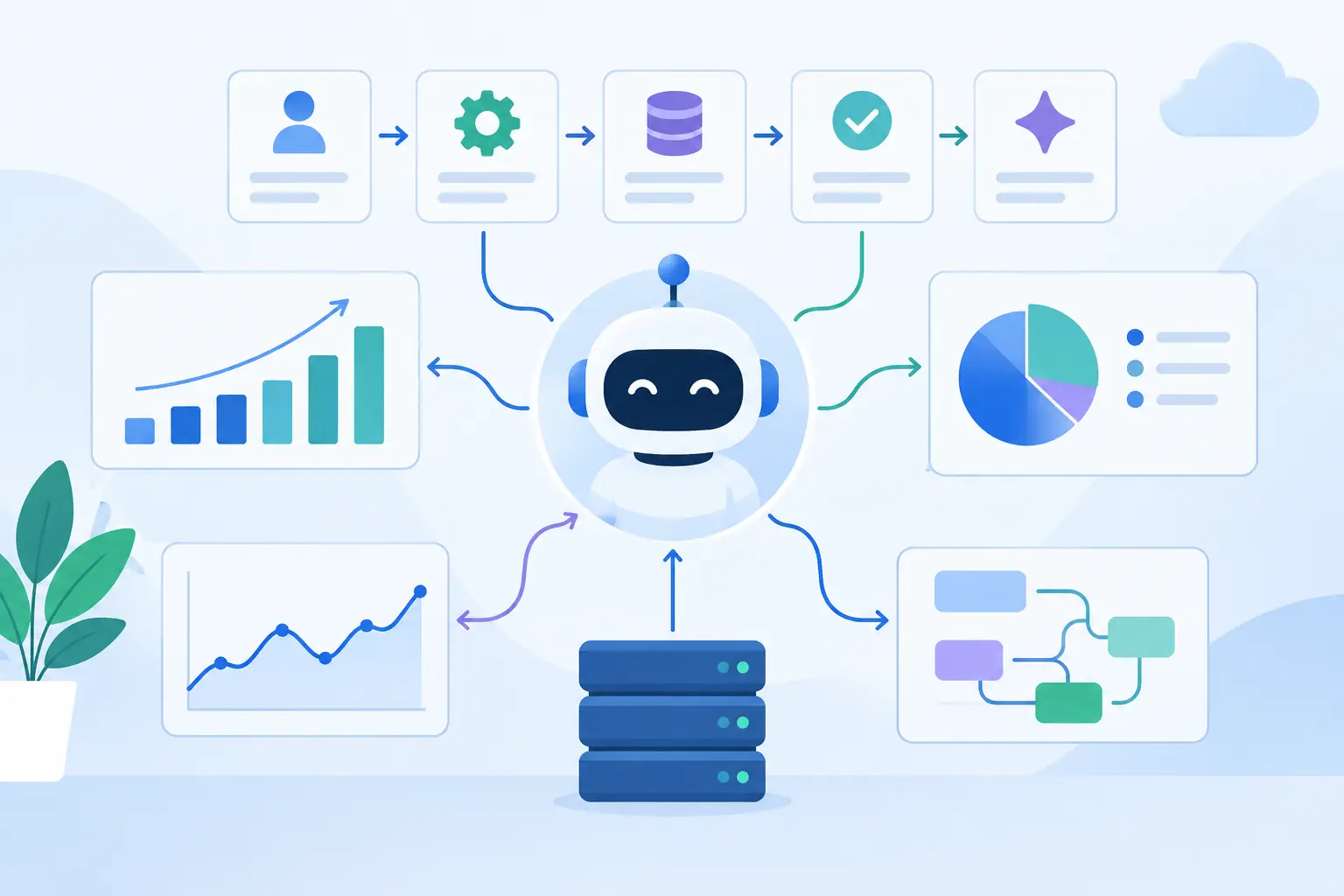
A well-designed automation layer addresses these failures by creating a single process from intake through execution and post-signature handoff. It should identify what is routine, recognize what falls outside policy, and route only the right decisions to the right people.
What an automated contract review workflow should do
The best implementation is not a generic AI review screen. It is a workflow built around your contract types, approval rules, risk tolerance, and existing systems.
At intake, the system should collect the document, identify its type, associate it with the appropriate account, vendor, or opportunity, and confirm that the latest version is being reviewed. Optical character recognition may be needed for scanned documents, while native document parsing is usually more accurate for Word files and digital PDFs.
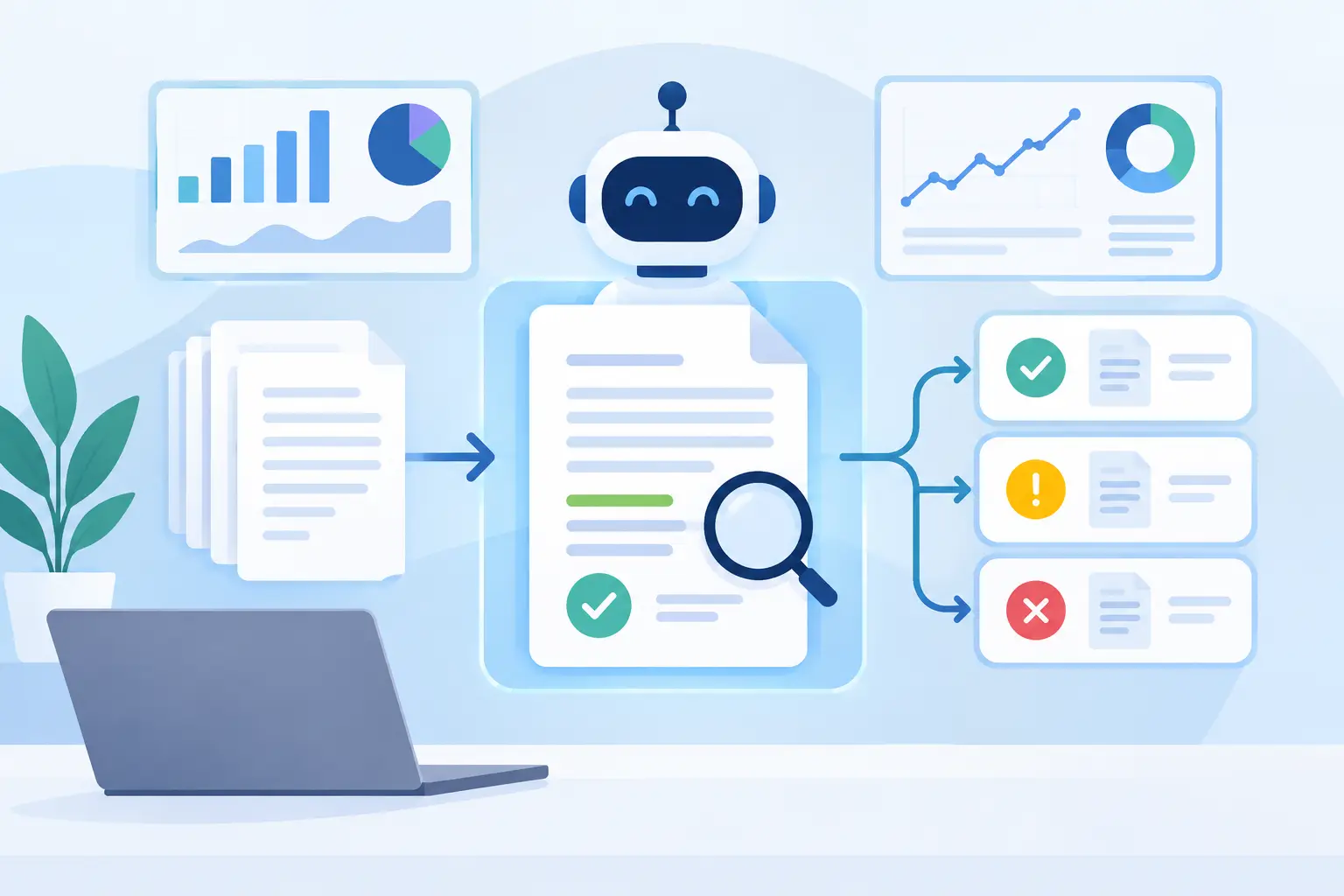
The analysis stage extracts defined fields and compares clauses with an approved playbook. Depending on the contract, this can include parties, effective dates, renewal terms, payment terms, liability caps, confidentiality language, governing law, termination rights, data processing provisions, and service-level obligations. An AI model can flag deviations, explain why they matter, and propose fallback language. It should not be allowed to silently approve a material risk position.
The workflow then applies routing logic. A standard NDA may be approved with minimal intervention. A customer agreement with a liability cap below the company threshold may go to legal. A payment term outside the finance policy may require finance approval. A data processing addendum may need privacy or security review. Those rules must be explicit, versioned, and traceable.
After approval and signature, the system should write the final commercial terms back to the systems that run the business. That may mean creating renewal reminders in a CRM, updating billing schedules in an ERP, opening onboarding tasks in a project platform, or recording obligations in a compliance register.
Build the workflow around risk tiers, not every possible clause
Trying to automate every contract scenario on day one is a common mistake. It creates a large policy-mapping project before the business has proven value. Start with a high-volume agreement type that has repeatable standards, such as NDAs, vendor agreements, MSAs, order forms, or customer amendments.
Define three operational tiers. Low-risk agreements follow standard language and can move through fast-track review. Medium-risk agreements contain expected variations that require a designated business owner or legal reviewer. High-risk agreements contain material deviations, unusual jurisdictions, regulated data requirements, major financial exposure, or unclear commercial terms and should receive full expert review.
The tiering model makes automation useful without making it reckless. It also gives leadership a clear measurement model: what percentage of agreements are standard, which exceptions recur, how long each tier takes, and where policy changes could remove friction.
Use a contract playbook as the source of truth
AI cannot compensate for an undocumented approval policy. Before implementation, teams need a practical contract playbook that defines acceptable terms, fallback positions, prohibited language, required approvers, and escalation conditions.
A usable playbook is more specific than “legal approval required.” It might state that net-30 payment terms are acceptable, net-60 requires finance approval, automatic renewal is permitted only with a 60-day termination window, and liability must not exceed a defined threshold without executive sign-off. These rules can be represented in workflow logic and made available to reviewers at the point of decision.
The playbook also needs ownership. Commercial, legal, finance, security, and operations teams should agree on who can change a rule and how changes are tested before they affect live agreements.
The architecture behind reliable automation
To automate contract review workflows in production, organizations need more than a large language model. They need an architecture that separates document understanding, business rules, approval orchestration, and system-of-record updates.
The document intelligence layer extracts text, preserves page and clause references, classifies agreement types, and returns structured fields. The AI analysis layer compares clauses against the playbook and produces findings with confidence levels and supporting source text. The workflow layer applies deterministic rules for routing, deadlines, notifications, and approvals.
This separation matters. A model can identify that a limitation-of-liability clause differs from the preferred version, but a policy rule should decide whether that difference requires legal escalation. Deterministic controls are easier to test, audit, and update. AI contributes speed and context; workflow logic provides operational discipline.
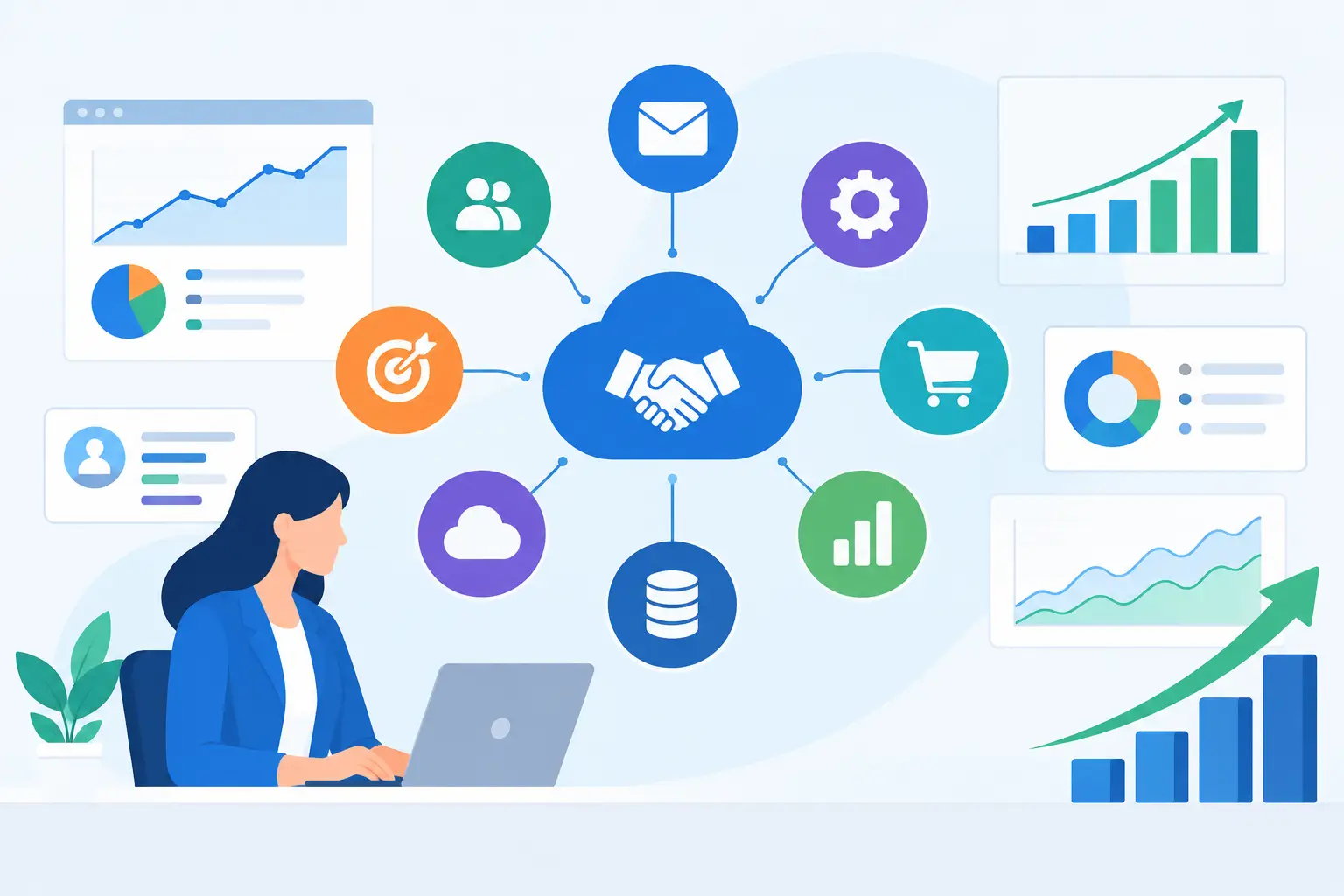
Integration is equally important. A review portal disconnected from the CRM, e-signature platform, document repository, and ERP simply creates another work queue. Secure API connections can pull account context from the CRM, associate final documents with the correct record, send approved agreements for signature, and update downstream teams after execution.
For sensitive contracts, access must follow least-privilege principles. The workflow should enforce role-based permissions, encrypt documents and data in transit and at rest, maintain event logs, and define retention rules. If the system uses external AI services, the organization should understand how prompts, files, and outputs are handled, retained, and isolated.
Keep humans in the decision loop where it counts
The right level of autonomy depends on contract volume, agreement complexity, industry requirements, and the cost of a bad decision. A startup processing simple NDAs may accept a high degree of automation. A healthcare, financial services, or enterprise software company handling regulated data and substantial liability exposure will require tighter review gates.
Human review should be built into material decision points, not added as an afterthought. Reviewers need a concise exception summary, the relevant clause text, the recommended fallback, account context, and a clear action to approve, reject, or request changes. Making people reopen long documents and search manually defeats much of the benefit.
Quality assurance should also include test contracts with known edge cases. Test missing pages, conflicting dates, low-quality scans, redlined versions, unusual clause wording, and agreements that combine multiple document types. Measure extraction accuracy, false positives, missed exceptions, routing accuracy, and approval turnaround time before expanding the workflow.
A practical rollout sequence
A controlled rollout generally follows four stages:
- Map the current process, systems, contract volume, bottlenecks, and approval policies.
- Build a pilot for one agreement type and validate it against historical contracts.
- Deploy with monitored approvals, feedback capture, and clear exception handling.
- Expand to additional agreement types once accuracy, adoption, and downstream integrations are proven.
This approach produces evidence before broad standardization. It also reveals whether the real constraint is document analysis, unclear policy ownership, disconnected systems, or limited reviewer capacity.
Measure business results, not model performance alone
Model accuracy matters, but it is not the executive metric. Track end-to-end cycle time, time spent per reviewer, percentage of agreements handled through the standard path, number of escalations, missed obligations, and the time required to create downstream records.
Also measure commercial outcomes. Faster turnaround on low-risk agreements can improve deal velocity. Structured extraction of renewal and pricing terms can reduce revenue leakage. Consistent approval controls can limit unapproved concessions and make audit preparation less disruptive.
Invatechs approaches this work as production software delivery: discovery and policy mapping first, then a focused pilot, secure integrations, QA, and continuous optimization. That discipline matters because contract automation only delivers value when it works inside the systems and controls people already rely on.
The most useful first step is simple: choose one contract type where volume is high, rules are reasonably clear, and delays are visible. Build the workflow around the decisions that recur, then let real operating data show where automation should go next.