A support team that copies details between a ticketing platform and an ERP does not need a chatbot for its own sake. It needs a controlled workflow that reads the request, retrieves the right account data, proposes the next action, and records the outcome in the systems the team already uses. That is where AI consulting becomes valuable: not as a technology demonstration, but as a disciplined path from operational friction to working software.
For mid-market and growth-stage companies, the opportunity is often substantial. Manual review queues, document-heavy processes, scattered knowledge, delayed approvals, and disconnected systems all create cost and slow decisions. The challenge is that AI only improves those conditions when it is connected to reliable data, defined business rules, and accountable human processes.
What AI Consulting Should Actually Deliver
Effective AI consulting starts with business operations, not a preferred model or vendor. The job is to identify where judgment, retrieval, classification, drafting, or orchestration can reduce effort without creating unacceptable risk.
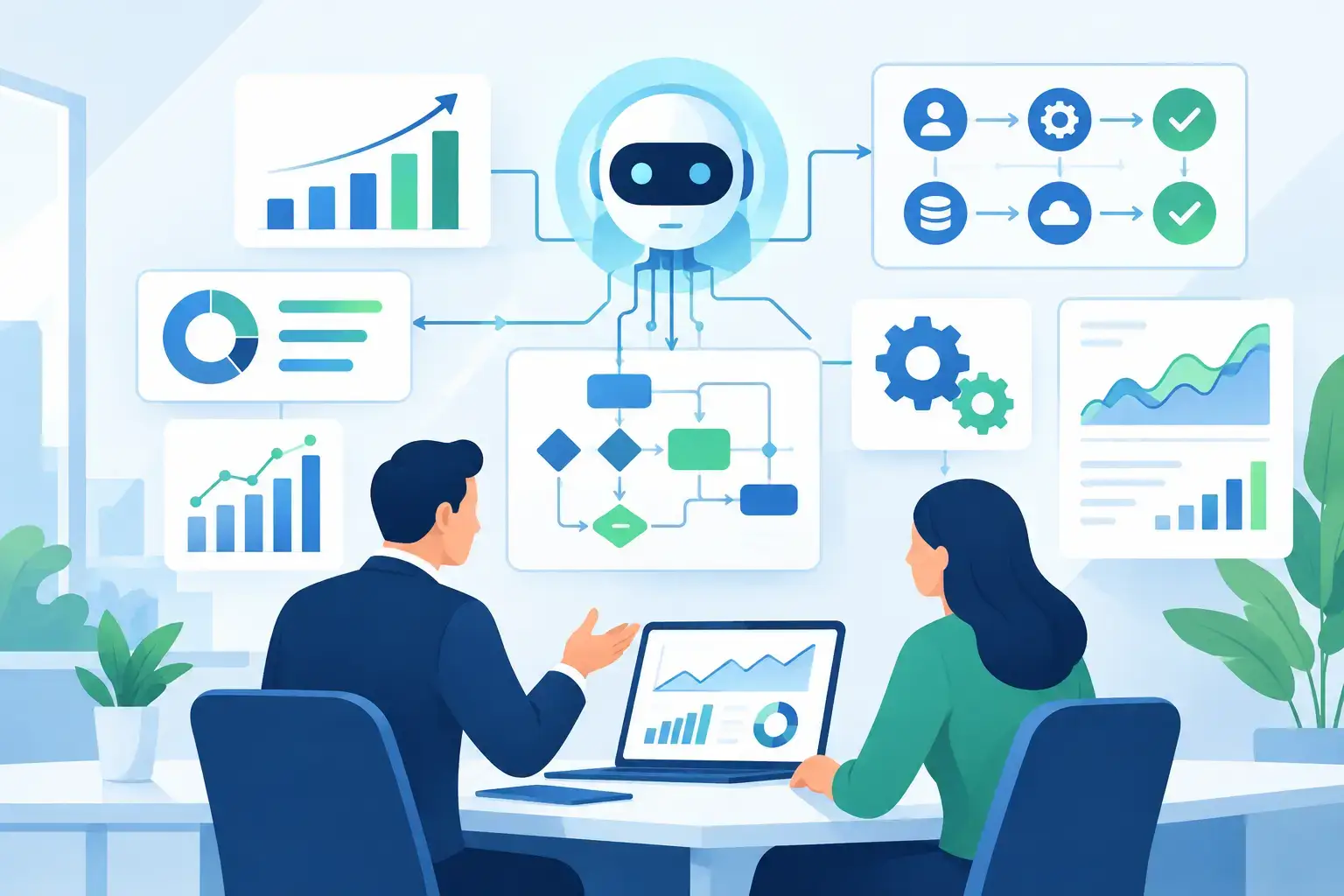
That requires more than prompting an LLM. A production solution may need secure access to CRM records, ERP data, internal policies, customer communications, and line-of-business applications. It may need role-based permissions, audit logs, approval steps, exception handling, and monitoring for quality and cost. The model is one component in a larger operating system.
A capable consulting partner helps leadership make decisions that are easy to postpone but expensive to ignore. Which workflow should be automated first? What data can be used safely? Where must a person remain in the loop? Should the team buy a tool, configure an existing platform, or build a custom application? The correct answer depends on the workflow, integration requirements, volume, compliance exposure, and expected business impact.
The output should be a prioritized implementation plan with a practical architecture, not a slide deck full of generic AI opportunities.
Start with a workflow that has measurable friction
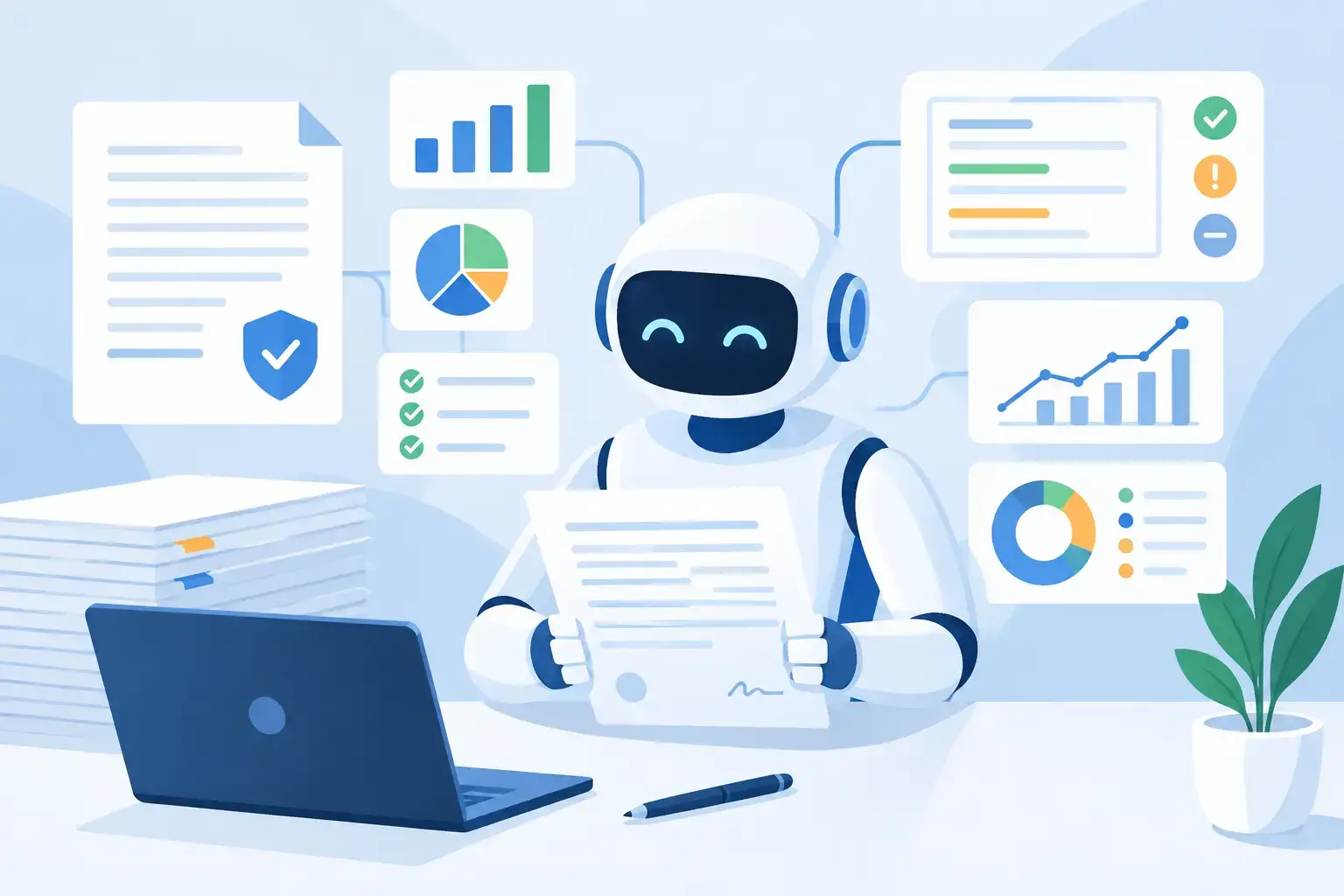
The strongest first use cases are usually specific and repetitive, but not necessarily simple. Consider an operations team reviewing incoming documents. An AI-enabled workflow can extract relevant fields, validate them against system records, flag missing information, summarize exceptions, and route complex cases to an employee. The result is not fully autonomous processing. It is a faster, more consistent process with a clear review path.
Other high-value examples include support ticket triage, sales and account research, underwriting assistance, contract intake, invoice processing, compliance evidence collection, and internal knowledge support. Each can produce measurable outcomes such as reduced handling time, fewer rework cycles, shorter response times, or improved throughput per employee.
The key is baseline measurement. If a company cannot describe the current volume, cycle time, error rate, and cost of a process, it will struggle to prove whether the implementation worked. AI consulting should establish those measures before development begins.
The Work Behind Production-Ready AI Consulting
There is a meaningful difference between a prototype that produces impressive answers and an application that employees can depend on every day. Production AI needs engineering discipline.
First comes discovery. Teams map the current workflow, identify decision points, document systems of record, and define failure scenarios. This is also the right time to determine whether AI is needed at all. Conventional automation, rules engines, APIs, or better application design can be more accurate and less expensive for deterministic tasks. AI is most useful where language, varied formats, incomplete information, or contextual judgment create a bottleneck.
Next comes architecture. The solution must define how data moves between systems, where it is stored, how access is controlled, and how outputs are validated. For many organizations, the safest approach is not to give an AI agent broad access to every business system. Instead, the agent uses narrowly scoped tools through secure connectors, with permissions and actions limited to what the workflow requires.
Then comes the pilot. A focused prototype should test real inputs and operational conditions, not only curated examples. It needs acceptance criteria such as extraction accuracy, escalation accuracy, draft quality, latency, and per-task cost. A pilot that cannot be evaluated against a defined baseline creates enthusiasm without evidence.
Finally, production deployment requires QA, observability, and ownership. Models can change, source data can become outdated, and user behavior can expose edge cases that were not visible during testing. Monitoring should show when the system is uncertain, when tool calls fail, and where human corrections occur. Those corrections can inform targeted improvements over time.
Integration Is Where Value Is Won or Lost
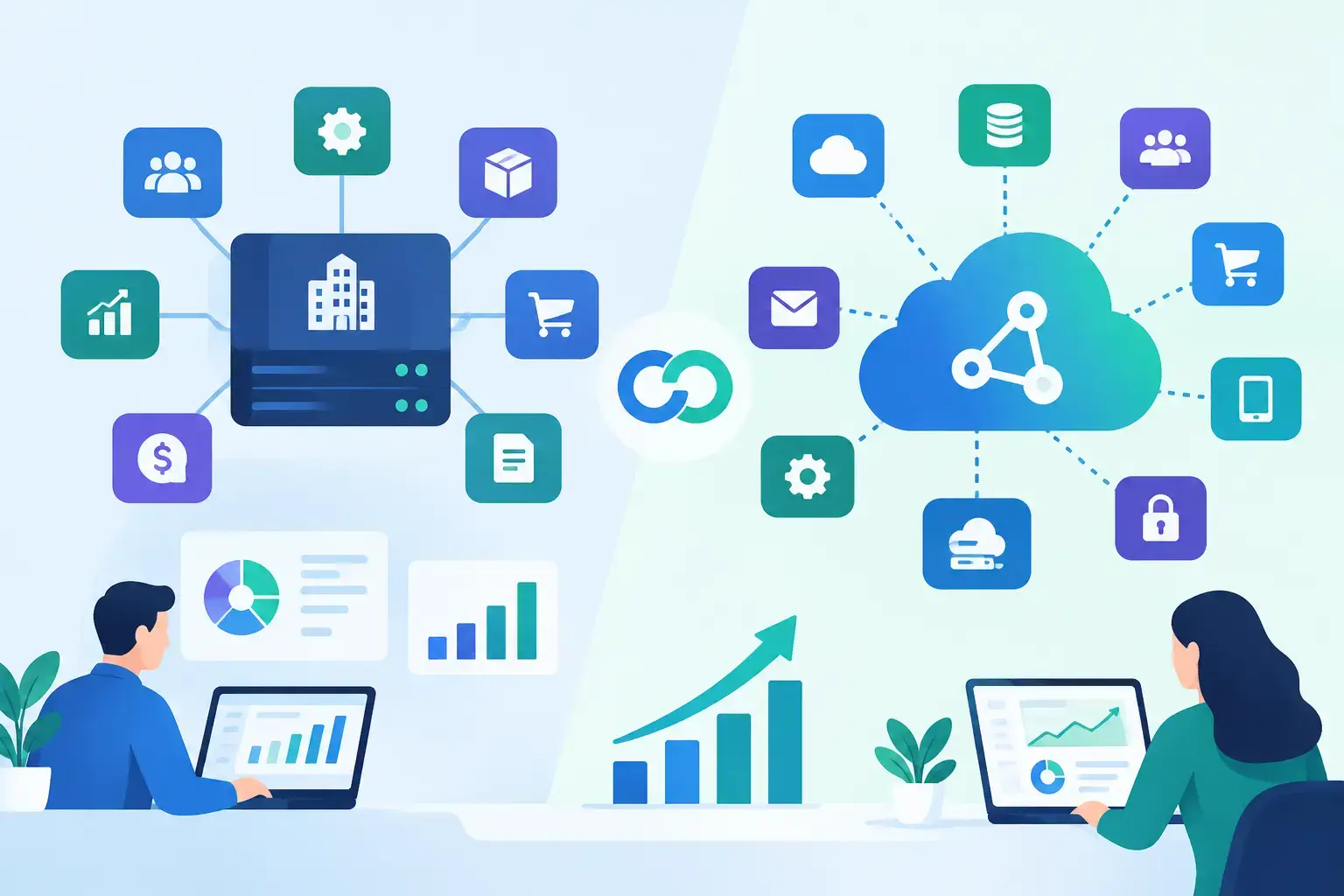
Most companies do not suffer from a lack of AI tools. They suffer from fragmented operational systems. Employees move between email, spreadsheets, CRMs, ERPs, support platforms, shared drives, and internal portals because information is distributed across the business.
An isolated AI assistant may save a few minutes on drafting. An integrated AI workflow can remove entire handoffs. For example, a customer request can be classified, matched to account context, checked against policy documentation, prepared for approval, and written back to the appropriate system. The employee sees the relevant context and recommended action without assembling it manually.
That level of automation depends on APIs, reliable data models, and clear ownership of system records. It also demands careful handling of exceptions. If an integration fails, the task should not silently disappear. If the AI output lacks confidence, the system should request review rather than invent an answer. If a policy changes, the underlying knowledge source must be updated and traceable.
This is why software delivery experience matters in AI consulting. The work involves application development, API integration, quality assurance, security controls, and ongoing maintenance alongside model selection and prompt design.
Security and Compliance Cannot Be Added Later
Organizations in finance, healthcare, insurance, legal services, and other regulated environments have valid reasons to move carefully. Yet caution does not require abandoning AI initiatives. It requires building them with appropriate boundaries.
Data classification should determine what can enter an AI workflow and what must remain restricted. Access controls should reflect existing employee permissions rather than bypass them. Sensitive actions, such as changing financial records or issuing customer commitments, should require explicit approvals. Logs should make it possible to review what information was used, what output was generated, and what action followed.
There is also a business risk beyond security: inaccurate output. AI systems can summarize incorrectly, misclassify unusual cases, or generate plausible but unsupported content. The answer is not to expect perfection. It is to design workflows that constrain the task, ground responses in approved sources, validate structured outputs, and route uncertainty to qualified people.
For some use cases, a human review step is nonnegotiable. For others, automation can proceed when confidence and validation thresholds are met. AI consulting should make those trade-offs explicit instead of treating autonomy as the default goal.
How to Evaluate an AI Consulting Partner
A strong partner can explain the delivery path in operational terms. They should ask about systems, data quality, workflow ownership, failure modes, and measurable outcomes before proposing an agent or model.
Look for an implementation approach that includes discovery, architecture, a bounded pilot, production engineering, and post-launch optimization. Ask how the team will test outputs, control access, handle exceptions, and support the solution after release. If the answer focuses only on model capabilities, the engagement is likely missing the work that determines whether employees can trust the result.
Technical capability also needs to match the business need. A company may need an internal agent connected to a knowledge base, a custom application with AI-powered features, an MCP server that exposes controlled tools to agents, or a workflow automation layer across existing platforms. The best route is rarely the most fashionable one. It is the one that removes a defined constraint with acceptable cost and risk.
Invatechs approaches these engagements as software and operations work first, with AI applied where it can create concrete automation. That means designing the connectors, controls, interfaces, and support model needed to make an AI capability useful after the initial demonstration.
The practical next step is to choose one process where the business already feels the cost of delay. Map the handoffs, measure the friction, define the decisions that require judgment, and identify the systems involved. A well-scoped first implementation can create a repeatable foundation for larger AI programs, without asking the business to bet its operations on an experiment.