
A growing operations team can have a capable CRM, finance platform, help desk, and document repository, yet still rely on spreadsheets and inboxes to move work forward. That gap is where the custom software vs SaaS decision becomes consequential. The question is not simply whether to buy or build. It is whether your operating model can run reliably on standardized software, or whether it needs a tailored layer that connects systems, enforces process, and automates decisions.
For mid-market businesses, the wrong choice creates costs that do not always appear in a pricing proposal. A SaaS platform can be fast to deploy but create manual workarounds, data duplication, and integration limits. A custom application can solve those problems but requires sound architecture, disciplined delivery, and long-term ownership. The right answer depends on where your business needs standardization and where it needs control.
Why This Is an Operating Model Decision
SaaS products are built to serve a broad category of users. They provide established workflows, vendor-managed infrastructure, recurring updates, and a predictable implementation path. For common functions such as payroll, accounting, basic CRM, collaboration, or ticketing, that standardization is often an advantage. There is little business value in rebuilding a mature commodity capability from scratch.
Custom software is designed around your specific process, data model, users, and commercial constraints. It is most valuable when the process itself affects margin, speed, customer experience, risk management, or scale. Examples include underwriting workflows, multi-step approvals, complex quoting, document intake, field dispatch, partner portals, and internal operations that cross several systems.
The distinction matters because software does not operate in isolation. A platform that appears adequate in a product demo may become a bottleneck once it must exchange data with an ERP, apply permission rules, interpret customer documents, and route exceptions to the correct team. At that point, configuration alone may not be enough.
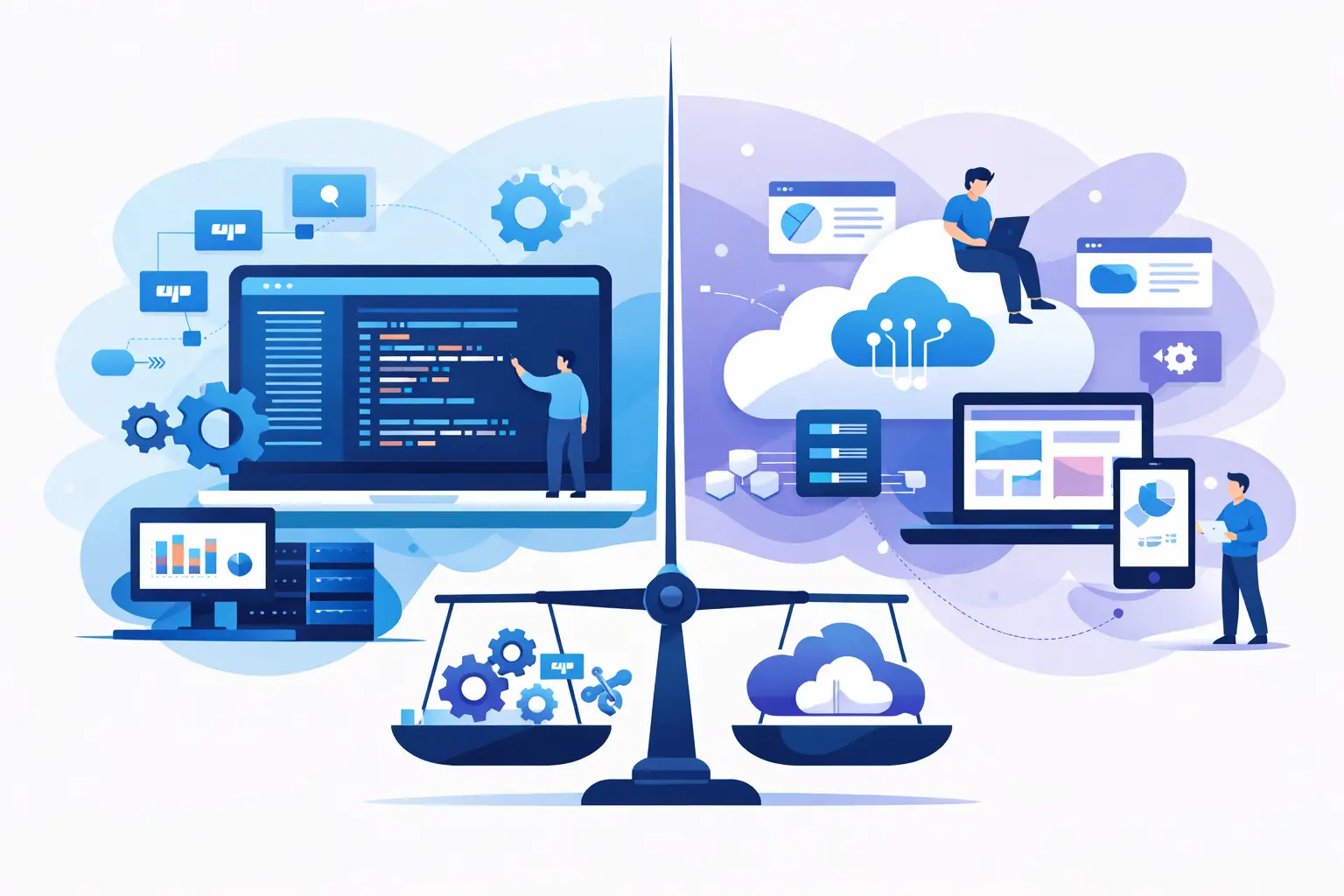
Custom Software vs SaaS: The Core Trade-Offs
The practical comparison comes down to fit, control, integration, economics, and speed. None of these factors should be evaluated alone.
Process Fit and Competitive Advantage
SaaS works best when your process can reasonably adapt to the product. Most platforms offer configuration, automation rules, templates, and extensions. Those capabilities can cover a meaningful portion of operational needs without introducing a major engineering effort.
The limitation appears when teams begin changing their process to accommodate software constraints rather than improving it. Repeated exports, shadow spreadsheets, disconnected approval chains, and manual reconciliation are signals that the platform is no longer supporting the work. If the workflow is central to how you win business or manage risk, custom software can turn that process into a controlled, measurable asset.
This does not mean every exception deserves a new application. A workflow that occurs rarely or has limited business impact may be better handled through disciplined procedures. Custom development earns its place when it removes recurring operational friction at scale.
Integration, Data Flow, and Control
SaaS products commonly expose APIs and prebuilt connectors, but an API does not guarantee a reliable operating workflow. Data fields may not map cleanly. Event timing can be inconsistent. Vendor rate limits, permission models, and product roadmap changes can affect what is possible.
Custom software gives you control over the orchestration layer. It can validate inputs, synchronize records, manage retries, log activity, and apply business rules before information reaches downstream systems. This is particularly useful when several platforms must function as one process rather than as separate tools.
Control also affects reporting. When critical operational data is scattered across vendors, leadership may spend days reconciling metrics that should be visible in one place. A tailored application or data layer can establish a clear source of truth without forcing a full replacement of existing systems.
AI Automation Requires More Than a SaaS Feature
Many SaaS vendors now offer AI assistants, summaries, and automation features. These can be useful for general productivity, especially when the task stays within a single platform. They are less effective when AI must act across systems, follow business-specific policies, or process sensitive operational information.
A production AI workflow may need to read documents from a secure repository, retrieve account context from a CRM, check status in an ERP, create a task in a service platform, and escalate uncertain cases to a human reviewer. It also needs access controls, audit trails, evaluation criteria, and fallback behavior. That level of execution usually requires custom integration and workflow engineering around the SaaS systems you already use.
The objective is concrete automation, not generic AI hype. AI should reduce handling time, improve decision consistency, or increase throughput in a measurable process. If it cannot connect to the systems where work happens, it is unlikely to deliver sustained operational value.
Cost, Time, and Ownership
SaaS has a lower initial cost and faster time to first use. Subscription fees are easier to approve than a large development budget, and the vendor manages much of the infrastructure. For a well-defined, standard use case, that is a strong financial argument.
However, the total cost of SaaS includes more than the monthly subscription. Account for per-user pricing as the organization grows, implementation consultants, premium modules, integration tools, manual administration, and the opportunity cost of inefficient processes. A low-cost platform can become expensive when it requires several adjacent products and staff members to keep data aligned.
Custom software requires upfront investment in discovery, design, development, QA, deployment, and support. It should not be justified on the assumption that ownership is automatically cheaper. It becomes economically sound when it replaces high recurring labor, avoids costly errors, supports revenue-generating workflows, or eliminates a growing collection of licenses and workarounds.
When SaaS Is the Right Choice
Choose SaaS when the business need is common, your process does not create meaningful differentiation, and speed matters more than deep control. It is often the right foundation for systems of record and mature business functions where vendors have already solved the underlying product problem.
It is also a practical choice when requirements are still changing. A growing company may benefit from adopting a standard platform first, learning how the team works, and delaying specialized development until the recurring bottlenecks are clear. Building too early can encode assumptions that the business has not yet validated.
The key is to implement SaaS with realistic expectations. Do not assume every workflow should fit inside one platform. Define where the system is authoritative, what data must move elsewhere, and where manual intervention is acceptable.
When Custom Software Is Worth Building
Custom software is justified when operational complexity is persistent rather than temporary. If teams repeatedly perform the same handoffs, validate the same documents, rekey the same data, or navigate multiple tools to complete one transaction, the process is a candidate for automation.
It is especially valuable in compliance-sensitive environments. A tailored workflow can enforce approvals, record decisions, limit access by role, and create an audit trail around actions that cannot depend on informal team practices. The same applies to customer-facing experiences where a generic portal creates friction or exposes internal complexity.
Custom development is also appropriate when a product or workflow must evolve quickly without waiting for a vendor roadmap. That control matters for companies building differentiated digital services, partner ecosystems, or AI-enabled operations that do not fit an off-the-shelf feature set.
The Hybrid Model Is Often the Best Answer
For most operationally complex companies, the best choice is not custom software or SaaS. It is a deliberate combination of both.
Keep proven SaaS platforms as systems of record where they provide real value. Then build the custom layer where work crosses boundaries: an internal operations console, a customer portal, a workflow engine, a reporting layer, or an AI agent with secure access to approved data sources. This approach avoids rebuilding mature capabilities while removing the fragmentation that slows teams down.
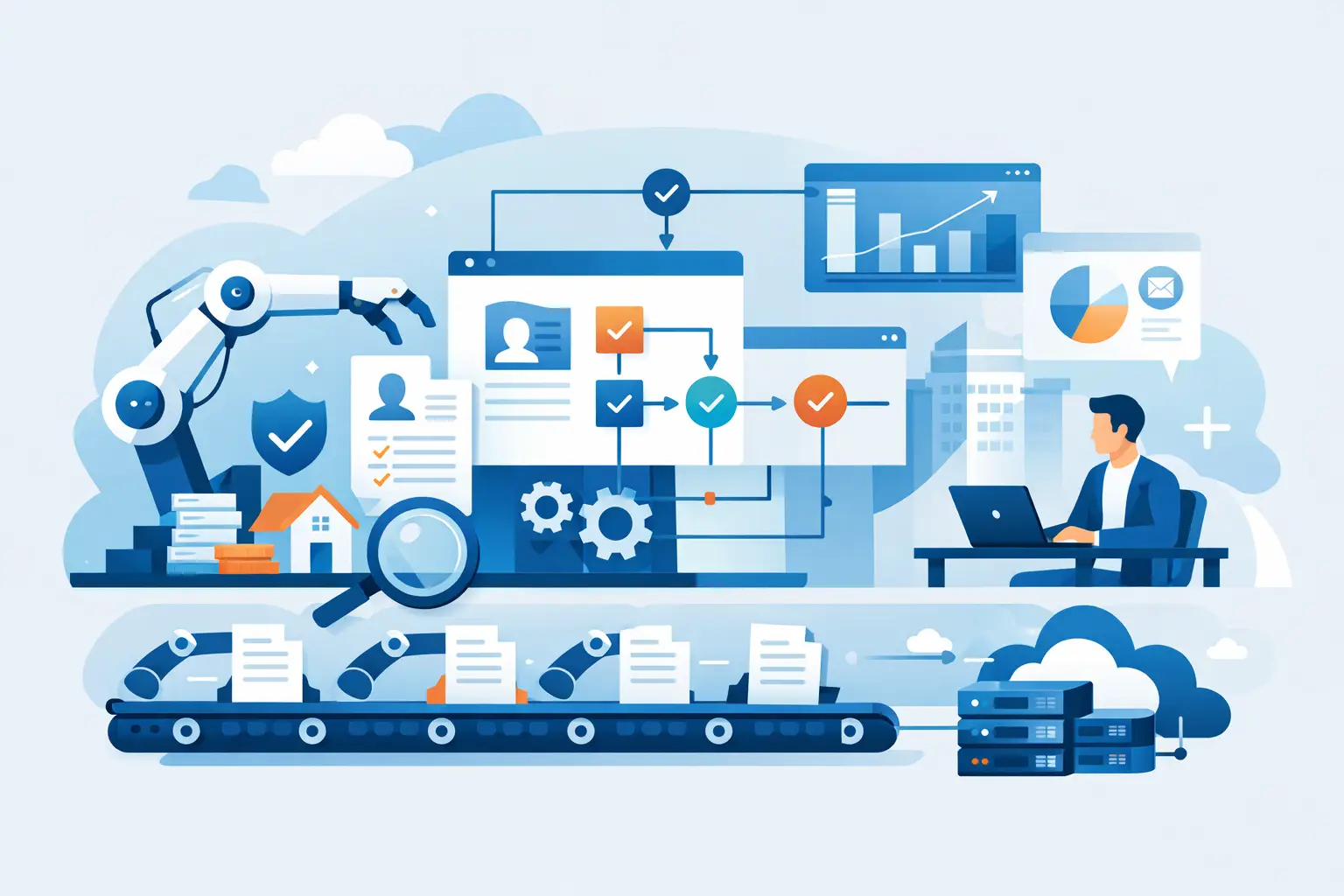
For example, an operations team may retain its CRM, ERP, and support platform while using a custom application to coordinate intake, verify documents, route exceptions, and trigger updates across each system. Users see one controlled workflow. The business retains the strengths of its existing tools without asking staff to become human middleware.
Make the Decision Through Discovery, Not Assumption
A sound decision starts by mapping the actual work, not the process described in a policy document. Identify where requests originate, which systems hold the required data, where handoffs fail, and how long exceptions remain unresolved. Measure the cost of delay, rework, and error before comparing software proposals.
Next, separate requirements into three categories: functions that can be standardized, workflows that require integration, and capabilities that create strategic value. This prevents a common mistake: commissioning a custom platform to recreate features that a reliable SaaS product already provides.
Finally, validate the highest-value workflow through a focused prototype or pilot. Production readiness still requires architecture, security review, QA, monitoring, and support planning, but a targeted pilot can prove whether the proposed automation improves the metrics that matter. Invatechs approaches this work as a delivery problem first: define the process, connect the systems, test the edge cases, and deploy software people can rely on.
Choose SaaS where standardization helps you move faster. Build custom software where your process, data, and customer experience demand more control. The most valuable technology strategy is the one that removes operational drag without creating a new system to manage.