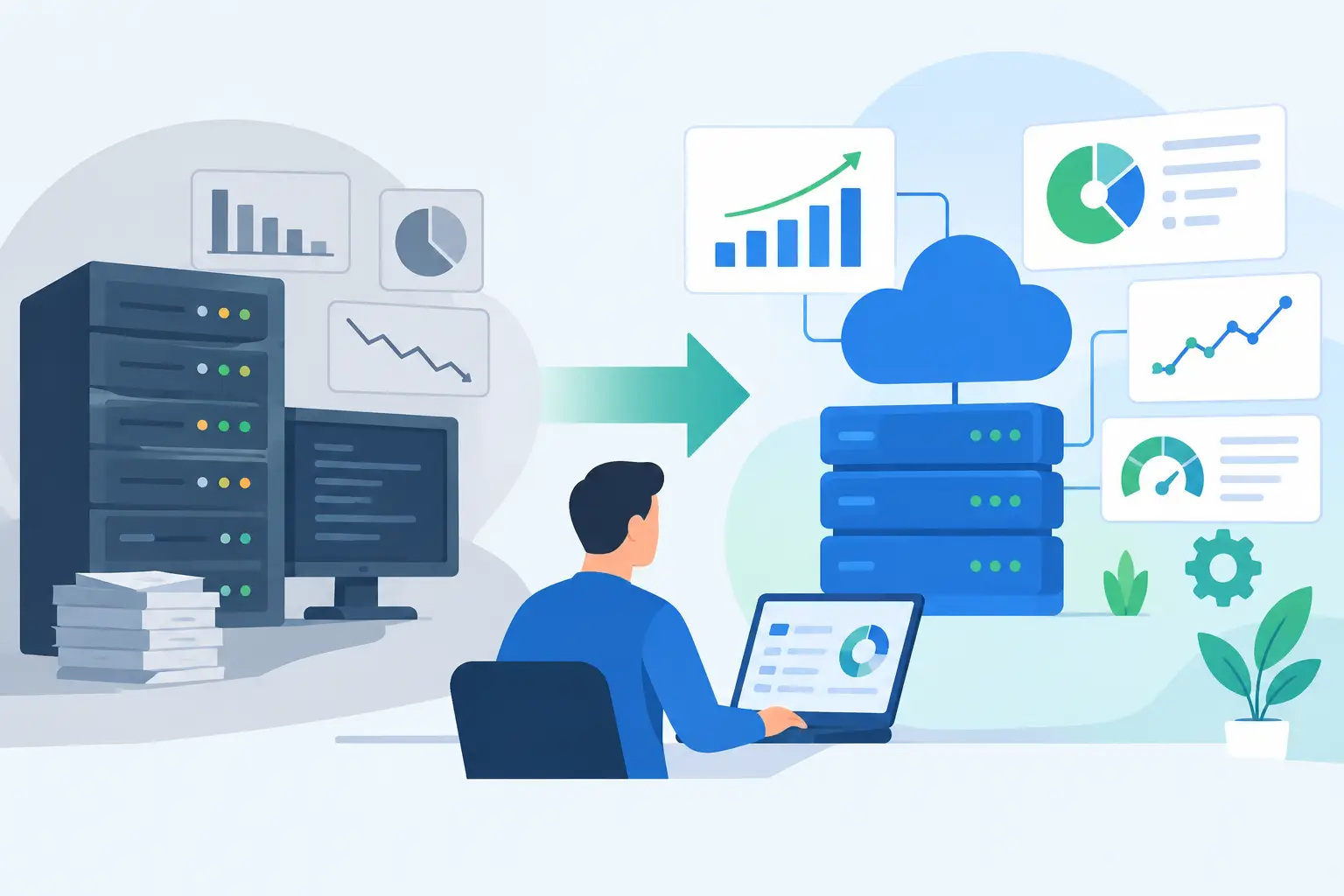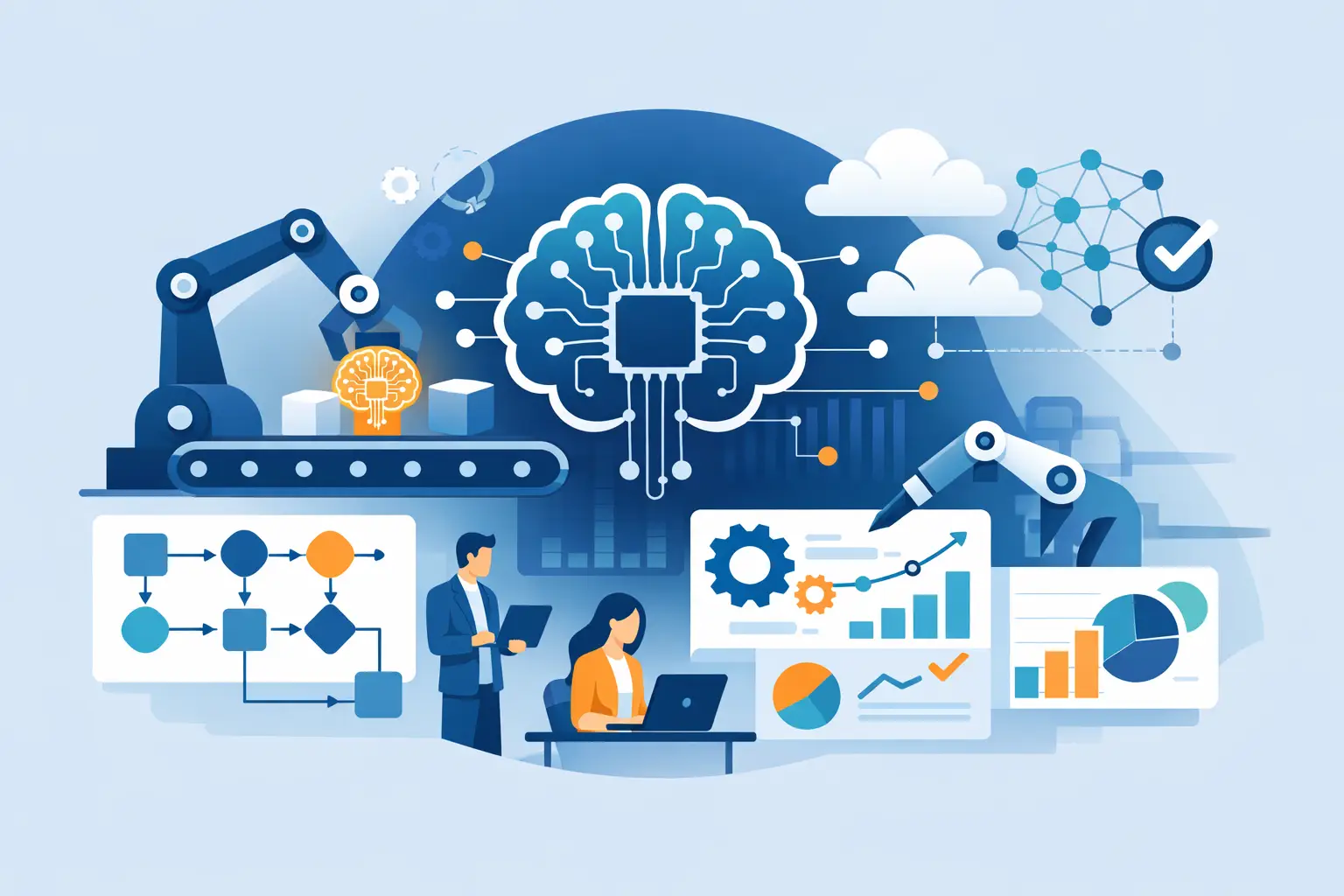
A sales team should not have to copy customer details from a CRM into an ERP. A support agent should not need three tabs and a spreadsheet to answer a billing question. And an AI assistant cannot produce useful work if the operational data it needs is trapped across disconnected systems. API integration services address these failures at the system level by connecting the software your business already relies on.
For operationally complex companies, integration is not a background technical task. It determines whether automation is reliable, whether data can be trusted, and whether new software creates leverage or adds another layer of manual work. The right implementation turns disconnected applications into a working operating environment.
What API Integration Services Actually Deliver
An API is a defined way for one application to request information from, or send information to, another application. Integration services use those interfaces to make systems exchange data and trigger actions under controlled business rules.
That definition sounds straightforward. Production implementation is not. A useful integration must account for data models, authentication, permissions, rate limits, field mappings, retries, error handling, monitoring, and ownership after launch. It must also reflect how people actually work, including exceptions that rarely appear in a clean process diagram.
Consider a new customer onboarding flow. A website form may collect initial information, a CRM may manage the opportunity, an identity provider may verify the customer, an ERP may create the account, and a support platform may provision the service request. Without integration, each transition becomes a manual handoff. With a properly designed workflow, validated data moves to the right system, tasks are created for the right team, and exceptions are routed for review.
The objective is concrete automation, not generic AI hype. API integrations reduce repetitive work, eliminate avoidable rekeying, shorten response times, and give teams a more complete view of operational activity.
Where API Integration Services Create the Most Value
The highest-value projects usually sit at points where a process crosses systems, teams, or approval boundaries. These are the places where delays, duplicate records, and missing context turn into revenue leakage, customer frustration, or compliance risk.
CRM, ERP, and finance coordination
Sales, fulfillment, finance, and customer success often operate from different systems with different definitions of the same customer. An integration can synchronize accounts, contacts, orders, invoices, payment status, and contract milestones while maintaining a clear source of truth for each record.
The design decision matters. Full two-way synchronization is not always the right answer. It can create conflicting updates and make troubleshooting difficult. In many cases, a directional workflow with explicit ownership is more reliable: the CRM owns prospects and commercial activity, while the ERP owns financial and fulfillment records.
Document-heavy workflows
Insurance, lending, logistics, healthcare-adjacent operations, and professional services frequently depend on documents that must be received, classified, reviewed, and routed. Integrations can connect intake portals, cloud storage, OCR tools, case management platforms, and internal databases.
This is also where AI can be practical. A document-processing workflow may extract fields, identify missing information, summarize relevant clauses, and create a review task in the system of record. The AI component should not be treated as an isolated feature. It needs controlled access to data, confidence thresholds, audit trails, and a human approval path for sensitive decisions.
Customer support and service operations
Support teams lose time when customer context is scattered across billing platforms, product databases, shipping systems, and internal knowledge bases. Connecting these sources can provide agents with relevant account details at the moment of service.
An AI support assistant can further help by retrieving approved knowledge, drafting responses, or classifying tickets. But it should not receive unrestricted access to every internal system. Permissions, data filtering, and action limits must be designed into the integration from the start.
Internal automation and operational intelligence
Many processes begin with a simple event: a contract is signed, a form is submitted, inventory reaches a threshold, or a request is approved. API-driven automation can notify the right people, update downstream systems, create tasks, and record the event for reporting.
The result is not merely faster task completion. It is a process that can be measured. Leaders can see where requests stall, which exceptions recur, and where additional automation will produce a worthwhile return.
Integration Architecture Determines Reliability
A quick connection can demonstrate potential. It does not automatically create a dependable operational capability. API integration services should begin with architecture choices that match the importance and complexity of the workflow.
For a low-risk internal notification, a direct connection may be appropriate. For revenue operations, financial data, or regulated processes, the design often requires a stronger integration layer that manages transformations, logging, retries, and security controls independently of the applications being connected.
Event-driven architecture is useful when systems need to respond quickly to a change, such as a completed payment or approved application. Scheduled synchronization may be sufficient when data freshness is less urgent and source systems have strict API limits. Neither approach is universally better. The choice depends on volume, timing requirements, cost, failure tolerance, and vendor capabilities.
Data mapping deserves equal attention. Two systems may both contain a field called “status,” yet one means sales stage and the other means account standing. An integration that moves fields without agreeing on business meaning will scale confusion faster. Clear mapping rules, validation logic, and ownership definitions prevent that outcome.
Security and Compliance Are Part of the Build
Integrations expand the path data takes through the organization. That creates value, but it also introduces risk when credentials, personal information, financial records, or proprietary documents are involved.
A production-grade approach uses least-privilege access, secure credential storage, encrypted data transmission, and environment separation between development, testing, and production. Sensitive data should be minimized in logs, and workflows should preserve the audit information needed to investigate failures or demonstrate compliance.
For AI-enabled processes, the question is more specific: what data can the model access, what actions can it initiate, and how are its outputs reviewed? A useful AI agent may need to read account history and draft a case summary. It does not necessarily need permission to issue refunds, alter ledger entries, or disclose confidential information. The integration layer should enforce those boundaries.
A Delivery Process Built for Production
Integration projects fail when implementation begins with connectors before the business process is understood. A better approach starts with discovery: identify the workflow, the systems involved, the source of truth, the users affected, the exception paths, and the outcome that will be measured.
The next step is architecture and pilot design. A focused pilot should validate the difficult parts early, such as an unreliable third-party API, an ambiguous data model, a document extraction problem, or a compliance constraint. It should prove a real operational use case, not simply show that two systems can exchange a test record.
Once the design is validated, implementation includes integration development, QA, security review, observability, and controlled deployment. Monitoring should capture failed events, processing times, duplicate activity, and workflow outcomes. An integration without alerts and ownership is likely to become a hidden operational risk.
Ongoing support matters because APIs change. Vendors deprecate endpoints, adjust authentication methods, alter rate limits, and introduce new fields. Business processes also evolve. A maintained integration is a managed capability, not a one-time handoff.
How to Evaluate an Integration Partner
The right partner should be able to discuss business process design and technical execution with equal discipline. Ask how they handle failed transactions, duplicate events, schema changes, security permissions, and human review for edge cases. If the answer focuses only on connecting tools, the scope may be too shallow for a business-critical workflow.
Look for a team that can build custom middleware when needed, but does not default to custom code when a simpler pattern is more appropriate. Low-code platforms can be useful for straightforward automation. Custom development becomes valuable when workflows require complex transformations, high volume, deeper security controls, proprietary systems, or AI features connected to internal data.
Invatechs approaches integration as part of a complete delivery system: process discovery, architecture, custom engineering, AI workflow design, QA, deployment, and ongoing support. That matters when the goal is to turn AI into working software connected to the systems your business already uses.
The most effective next step is to choose one workflow where manual handoffs are creating measurable friction. Define the owner, the systems, the exception cases, and the metric that should improve. That gives an integration effort a business target worth engineering for.